
.jpg "The Life-Saving Benefits of Proper Torque Techniques")
Proper torque is critical to a vehicle's safety and performance.
When torque is applied to proper specifications, key benefits include:
-
Enhanced safety: Proper torque ensures a safe and secure connection between the wheels and the vehicle. By applying torque to the correct specifications, you reduce the risk of the car suffering a wheel-off incident while driving, prioritizing the safety of your customers and the roads.
-
Improved tire lifespan: When the lug nuts are properly torqued, it helps to distribute the load evenly across the wheel hub and prevents excessive stress on the tires. This promotes even wear and tear, extending the lifespan of the tires.
-
Optimal performance: Proper torque ensures that the wheels are securely fastened, minimizing vibrations and instability. This results in improved handling, traction, and a smoother ride.
-
Prevents damage to wheel hardware: Over-tightening or under-tightening the lug nuts can lead to damage or distortion of the wheel studs or threads. Applying proper torque protects the integrity of your wheel hardware.
Understanding the Risks of Over-Torquing
Over-torquing can lead to a variety of risks and potential damage to a vehicle and others on the roadway. When the lug nuts are tightened beyond the recommended torque specification, it puts excessive stress on the wheel studs. This can cause the studs to stretch, deform, or even break, which can result in a serious accident caused by a wheel-off . Additionally, over-torquing can lead to warped brake rotors due to the uneven pressure on the wheel assembly. Understanding these risks is crucial for ensuring the safety and performance of your customer’s vehicle.
Best Practices for Achieving the Proper Torque
Vehicle Safety
-
Work on a flat and level surface.
-
Secure the wheels that are not being torqued with wheel chocks.
- Use a jack to safely lift the vehicle off the ground to remove the wheel.
- After you jack up a vehicle, it's important that you use jack stands if it's on the ground.
Prep and Inspect the Surface
-
After removing the lug nuts and wheel, clean the mounting surface to ensure a clean and secure fit.
-
Inspect the mating surface of the wheel for cracks or damage, and ensure bolt holes are not severely worn and the threads and hex surfaces on the studs are in good condition.
Reassemble
-
After placing the wheel back on the hub, hand-tighten the lug nuts in a star pattern starting at the 12 o'clock position . Using your hands first ensures they are not cross-threaded. This ensures even pressure distribution and reduces the risk of wheel imbalance.
Time to Torque
-
A torque wrench is essential for accurately applying the correct amount of torque to the lug nuts. Calibrate the torque wrench regularly to maintain its accuracy.
-
Follow the manufacturer’s recommended torque specifications
-
Starting at the 12 o’clock position, slowly and evenly apply torque in a star pattern until the specifications are met.
-
Do not over/under tighten the lug nuts
One Final Check
-
When the vehicle is safely on the ground use a torque wrench to check the lug nut torque one final time.
-
It is recommended to have the customer come back in to recheck the vehicle after driving up to 50 miles to ensure the lug nuts have not loosened.
An easy way to follow best practices and ensure proper wheel installation every time, is to remember and follow the RIST acronym developed by the Tire Industry Association.
R= Remove Debri
I=Inspect Components for WearS= Snug Fasteners in a Star PatternT=Torque to Specification
Tools
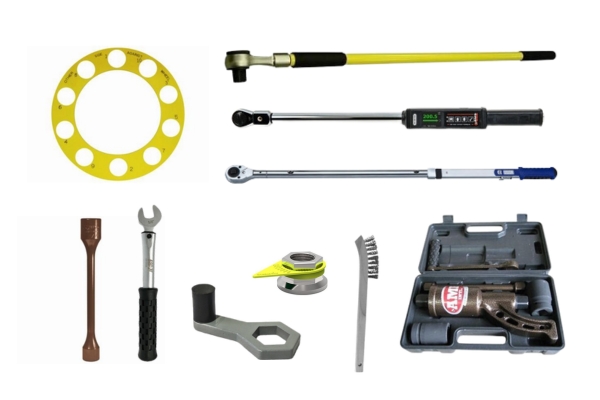
A properly calibrated torque wrench is an essential tool. There are many varieties and sizes to choose from, such as a ratcheting torque wrench, preset torque wrench, micro-adjustable torque wrench, split-beam wrench, and more. We carry all varieties for all your needs.
We also carry a variety of torque parts and accessories, like torque sockets, extensions, rim protectors, and loose wheel nut indicators.
Wire brushes are also needed for properly cleaning and preparing surfaces. They come in a variety of sizes including smaller hand brushes meant for intricate areas like bolt holes.
If you are not sure what you need, or would like us to create a torque kit for your shop, we would be happy to help. We have a dedicated and knowledgeable team available. Contact us to get started.
Torque Calibration Service
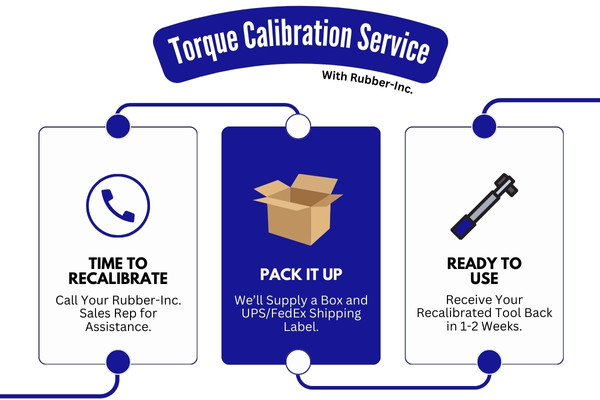
It is recommended that torque wrenches are calibrated to specifications. We want to be your partner in safety, which is why we’ve partnered with Team Torque to provide a convenient service to our customers to help maintain the integrity of their tools.
When ready, our customers can contact their sales rep or customer service for assistance. We'll supply a shipping box and label for your tool, which you can then hand over to your FedEx or UPS driver. Your torque wrench will be sent to Team Torque for calibration and/or minor repairs. Expect your certified and recalibrated torque wrench to return within 1-2 weeks. Click HERE to get started.