
Ag and OTR Tire Tread Patterns
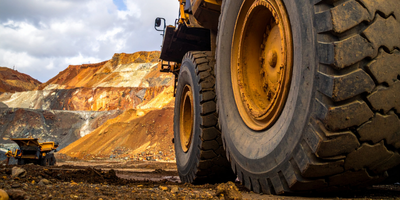
Tires for heavy vehicles like construction and agricultural equipment are built to the extreme requirements of the job, with unique tread patterns. If you want to expand your tire business into this market, you need to understand the differences between these tire types and their applications.
OTR Tires
OTR (off the road) tires are subjected to more extreme conditions than any other type. They need to be able to handle huge amounts of weight and the most difficult terrain.
No doubt you’re familiar with the general construction of tires, so we won’t spend a lot of time explaining it here. OTR tires come in bias, belted bias, and radial types. Bias and belted bias tires are less flexible, but easier to repair. They’re a good choice for vehicles that move at low speed, or for terrain where cuts in the tire sidewall are a concern. Radial tires have more flexibility. They can carry even heavier loads than bias tires, and are better for vehicles like trucks that may need to travel at relatively higher speeds. However, they generally aren’t as easy to repair.
A Note on TRA Codes
TRA codes are an internationally standardized system that indicates which OTR tires are appropriate for which type of machines.
Becoming familiar with the TRA code system allows you to quickly find tires appropriate for your specific OTR needs.
OTR Tire Tread Patterns
Rock
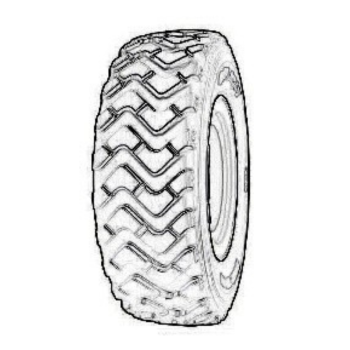
The “rock” pattern is made up of lugs arranged in Z-shaped or S-shaped lines with grooves in between that run from side to side across the tread face. As you might guess from the name, the rock pattern is designed to resist damage from sharp rocks. Their great durability, wear resistance, and traction in bad conditions made rock pattern tires the most popular OTR type. Rock pattern tires are sometimes indicated with a letter R at the end of a TRA code.
Traction
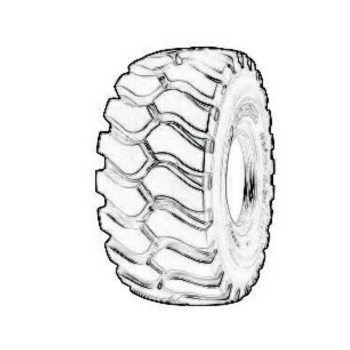
Aren’t all tires designed for traction? Yes, and if you’re thinking that this means that “traction” isn’t a very descriptive name for a tread pattern, we agree, but we didn’t choose the name. In any case, this tread pattern is very common for tires on equipment like earthmovers and dozers. This is a directional tread pattern that combines lots of biting edges, enough surface area for reliable grip and breaking, and voids between the rubber to help the tire dig in. This pattern is sometimes called out with a letter T at the end of a TRA code.
Block
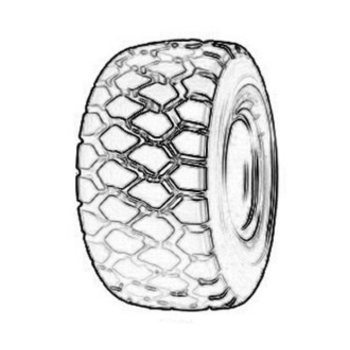
This pattern is made up of a variety of geometric shapes that help the tire hold up on hard surfaces that would wear down other patterns fast. Like the traction pattern, “block” pattern tires are commonly used on vehicles like earthmovers and loaders, but whereas the traction pattern excels on soft terrain, the block pattern is preferred for concrete and asphalt. Block pattern tires are also available in both directional and non-directional types, depending on whether maximum grip or simplifying the process of swapping sides to ensure even wear is a higher priority.
Rib
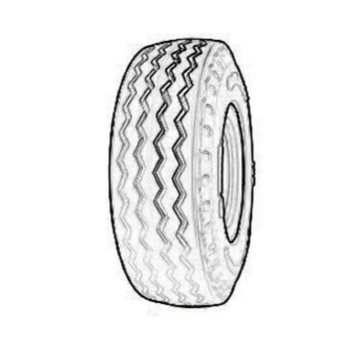
The “rib” pattern has ribs running parallel to the direction of travel. These tires are usually seen on free-rolling wheels on equipment like backhoes and industrial tractors.
Agricultural Tires
Agricultural equipment like tractors are used for a wide variety of purposes and on widely varying types of terrain. Specialized tires are available to meet the specialized demands of agricultural applications.
Like OTR tires, agricultural tires use bias or radial construction. Since speed is rarely a significant factor in picking the right tires for agricultural applications, comparisons between them come down mainly to factors like cost, reliability, and fuel economy. Bias tires are a cost-effective choice for lighter duty. Radial tires have better traction, last longer, give better fuel economy, and are generally more suited to larger farm equipment.
Ag Tire Tread Patterns
R-1/R-1W
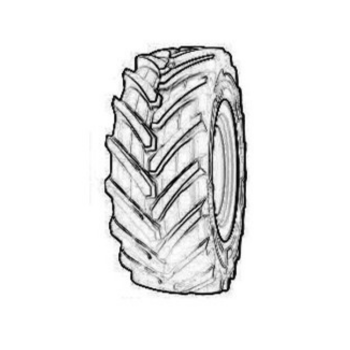
R-1 and R-1W tread pattern tires are the most common type of ag tires, to the point that the term “ag tires” is sometimes used to refer solely to R-1 and R-1W tires. Their deep bar-lug tread allows them to perform well on soft surfaces and uneven terrain like wheat fields. The R-1W (W for “wet)” variant has a deeper tread pattern than the standard R-1 which improves performance in wet and muddy soil.
R-2
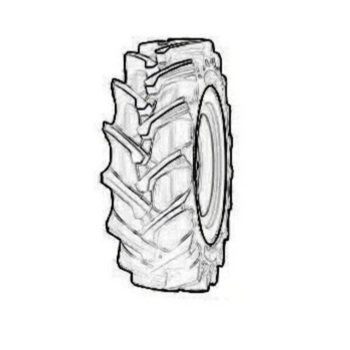
The R-2 tread pattern is similar to the R-1. The difference is in depth. R-2 tires are designed for working in extremely wet terrain, even more so than the R-1W, and so the R-2 tread pattern is at least twice as deep as the R-1.
R-3
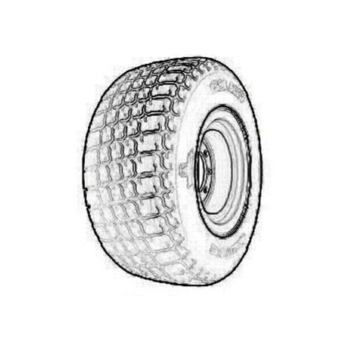
The R-3 tire tread pattern is a very different beast from the R-1 and R-2. With a high rubber-to-void ratio, R-3 tires (also called “turf tires”) are designed for use with forage crops or on grass.
R-4
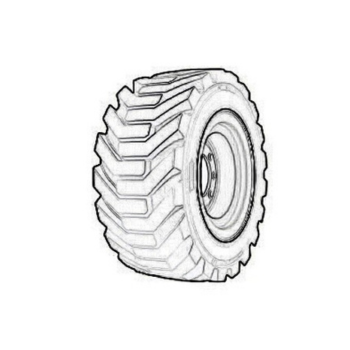
The R-4 tire tread pattern is a bar-lug pattern like the R-1/R-1W and R-2, but with a less steep angle and usually with significantly less depth. R-4 tires are often called “industrial tires” and are often seen as the standard equipment on compact tractors. R-4 tires are designed to strike a balance that allows them to work on a wide range of surface types, but they are better suited to gravel and paved surfaces than other ag tire types.
Maintaining Ag and OTR Tires: Tips and Tools
The fundamentals of maintenance for heavy equipment tires are much the same as for standard road tires, but the unique conditions and extreme loads that they’re subjected to means that you do need to be more vigilant about certain problems.
Review our quick guide to heavy equipment tire maintenance here, and get in touch with us to find out about how we can help you with your maintenance supply needs.