
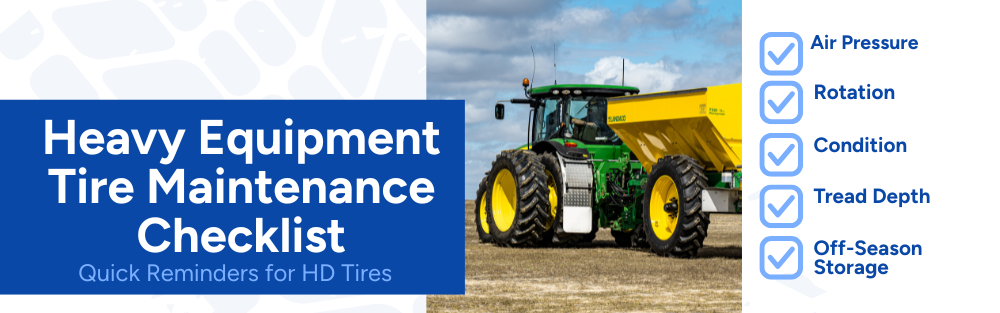
Air Pressure
As with any tire, ag and OTR tires need to be correctly inflated to perform at their best. Underinflated tires can heat up and are more likely to wear unevenly, which reduces performance and can lead to failures.
Rotation
Like road tires, OTR tires should be periodically rotated to ensure they wear evenly and maximize their useful lifespan. The exact rotation schedule will depend on the type of equipment and the worksite conditions.
Condition
Ag and OTR tires are tougher than your average road-going passenger vehicle tire, but they’re also used in conditions where there are many more potentially damaging hazards. Look for abnormal wear and any signs of cracks, bulges, cuts, or embedded debris. On ag tires, look for stubble damage, which is damage caused by the strong stalks of plants piercing or eroding the tread face, shoulder, or sidewall.
Tread Depth
Place a tread depth gauge on the tread blocks and extend the probe into the space between the lugs. If your tires’ tread is at 20% or less of the original depth, it’s time to replace them.
Off-Season Storage
Putting a little extra time into properly storing ag tires when the season is over will help you get more long-term use out of them. Clean them thoroughly with soap, water, and a tire brush. Store the tires upright in a cool, dry environment, preferably inside airtight storage bags.