
Your Chlorinated Brake Cleaner Is Going Away
The EPA has issued a rule that phases PERC, the chemical in most chlorinated brake cleaners, out of the supply chain. Manufacturing stopped in June 2026, distributors must stop supplying retailers on December 8, 2026, and retailers must stop selling it on March 8, 2027.[1] Suppliers are already cutting off orders. Here's the short version of what you need to know.
The Short Version
Most chlorinated brake cleaners on the market use a chemical called PERC (perchloroethylene). The EPA ruled it's too hazardous for continued use and banned it. Suppliers are setting final order dates now. Once current stock is gone, it's gone.
If you're using chlorinated brake cleaner, you'll need to switch. The good news: compliant alternatives already exist and work just as well.
Why PERC Is Being Banned
PERC is a strong solvent that is effective at cutting grease, which is why it ended up in brake cleaners. The problem is extended exposure is hard on your body. The EPA found links to liver damage, kidney damage, and cancer risk -- especially for workers using it in shops and enclosed spaces day after day.
This isn't a new concern. It's been building for years, and the EPA finalized the ban in December 2024.
What the Timeline Looks Like
DECEMBER 2024 EPA officially bans PERC in consumer and commercial products, including brake cleaners.
JUNE 11, 2026 Manufacturing and import of PERC stopped.[1]
SEPTEMBER 9, 2026 Processing of PERC stopped.[1]
NOW Suppliers are announcing final purchase dates. Existing stock won't be replaced. This is the time to act.
DECEMBER 8, 2026 Distributors can no longer supply PERC products to retailers.[1]
MARCH 8, 2027 Retailers can no longer sell PERC products.[1]
JUNE 7, 2027 Industrial and commercial use of PERC is prohibited.[1]
What You Need to Do
- Check your current brake cleaner's SDS -- does it list PERC or perchloroethylene?
- Ask your supplier if they've set a final order date on chlorinated products.
- Identify a 50-state compliant replacement before you run out.
- Switch on your schedule -- not when you're out of stock and under pressure.
A Drop-In Replacement That's Already Compliant
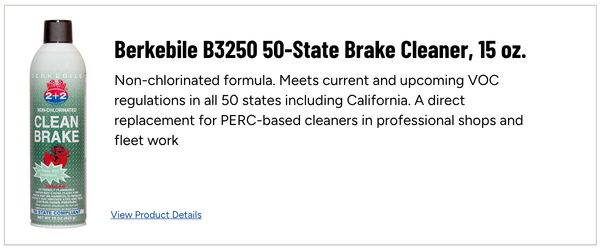
We carry a 50-state compliant brake cleaner that's ready to go. No reformulation coming, no supply disruption on the horizon. It's already built to meet the strictest regulations in the country.
The Bottom Line
[1] Source: U.S. Environmental Protection Agency, Fact Sheet: 2024 Final Risk Management Rule for Perchloroethylene under TSCA (December 2024), "Compliance Timelines for Prohibitions." More from EPA: Risk Management for Perchloroethylene (PCE) under TSCA.