
Safety Bulletin: Zipper Ruptures
Zipper Ruptures in Steel Cord Radial Truck Tires
PURPOSE
The purpose of this bulletin is to explain what a zipper rupture is, what causes it, and why it is extremely dangerous. We will also review how to prevent zipper ruptures, including proper inspection techniques and inflation procedures.
What is a Zipper Rupture?A zipper rupture is a dangerous sidewall tear that can occur in steel cord radial medium and light truck tires. It appears as a long tear along the tire's circumference.
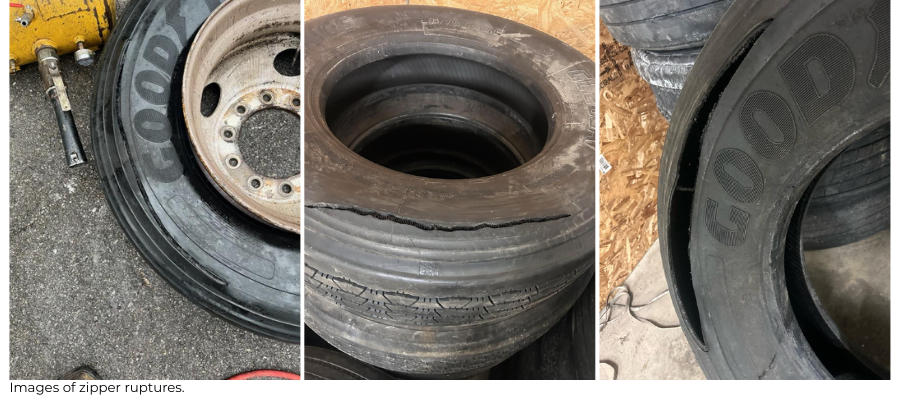
- Explosive Force: Zipper ruptures can occur at any inflation pressure, but they are more likely to happen above 20 psi. The escaping air creates a powerful explosion that can cause serious injury or death.
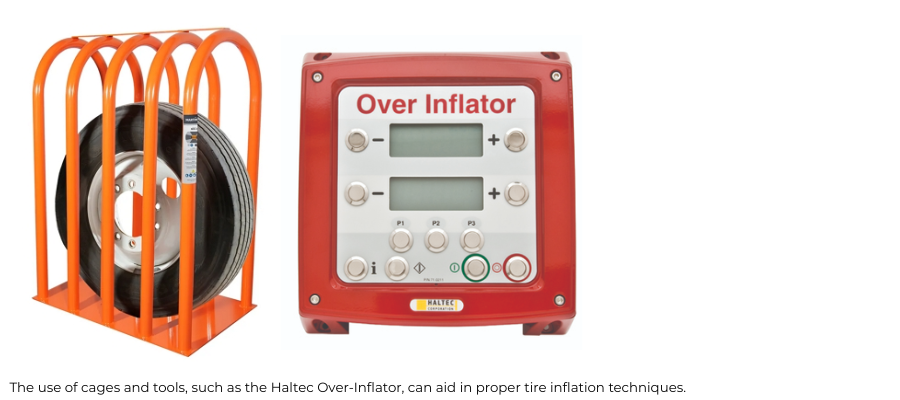
- Safety Cages: While safety cages can contain the tire and rim assembly, they cannot contain the forceful blast of air.
Preventing Zipper Ruptures:
- Proper Inflation: Maintain the correct tire pressure as specified by the manufacturer.
- Regular Inspection: Regularly inspect tires for signs of damage, such as bulges, cracks, or exposed cords.
- Safe Inflation Practices: Use an OSHA-approved safety cage when inflating tires. Maintain a safe distance from the tire during inflation.
Inspecting Tires for Potential Zipper Ruptures:
- Deflate and Remove: Deflate the tire completely and remove it from the vehicle. Demount tire from rim/wheel
- Visual Inspection: Look for punctures, bulges, cuts, or exposed cords.
- Hands-on Inspection: Feel for soft spots, distortions, or protruding wire filaments.
- Non-destructive Testing: If available, use methods like shearography or X-ray to check for internal damage.
Inflation Procedures:
-
Initial Inflation: Mount the tire on the rim and inflate "with the core removed" to 5 psi to seal the beads. Place the assembly in a safety cage.
- Safety Gear: Always wear appropriate safety gear.
-
Safe Distance: Maintain a safe distance from the tire during inflation. Always remain outside of the tire’s trajectory.
- Monitor for Distress: Stop the inflation process immediately if you hear unusual noises or see signs of distress.
- Inflation to 20 psi: With the Core removed, Inflate the tire to 20 psi.
- Over-Inflation Technique:
- For light truck and medium truck tires, inflate to 20 psi over the cold inflation pressure (but do not exceed 120 psi).
-
For bus and refuse tires, inflate to 20 psi over the cold inflation pressure (follow manufacturer's recommendations).
-
If none of these conditions are present, adjust the inflation pressure to the recommended operating inflation pressure and install the valve core.
Important Safety Considerations:
- OSHA Compliance: Follow all OSHA regulations and manufacturer guidelines.
Tire Disposition:
- Repairable Damage: If the tire has minor damage, refer it to a tire professional for repair.
- Non-repairable Damage: If the tire exhibits signs of a potential zipper rupture, mark it as unserviceable and scrap it.
Remember:
- Prioritize safety when handling tires.
- Follow recommended inspection and maintenance procedures.
- Be aware of the dangers of zipper ruptures.
Additional Resources:
For additional information on tire safety and zipper ruptures we recommend visiting the Tire Industry Association (TIA), USTMA, and the Technology and Maintenance Council of the American Trucking Associations (TMC).